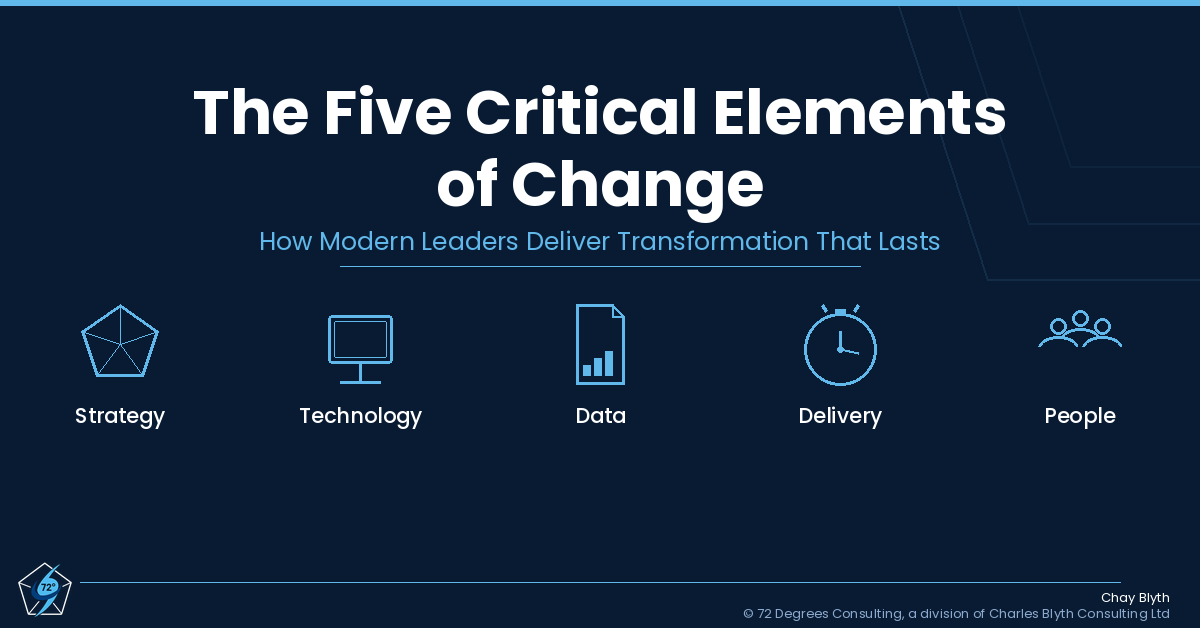
A perspective on a human centric view of change and why real transformation only works when the five dimensions of change - Strategy, Technology, Data, Delivery and People - move together.
As this is our first article, it feels right have a short side conversation: why 72 Degrees?
Our name embodies our commitment to balanced, human-centred transformation. Inspired by the golden ratio, which involves five points spaced at 72° around a circle, connecting these points creates a pentagon or pentagram, symbols of harmony and precision prevalent in nature and design.
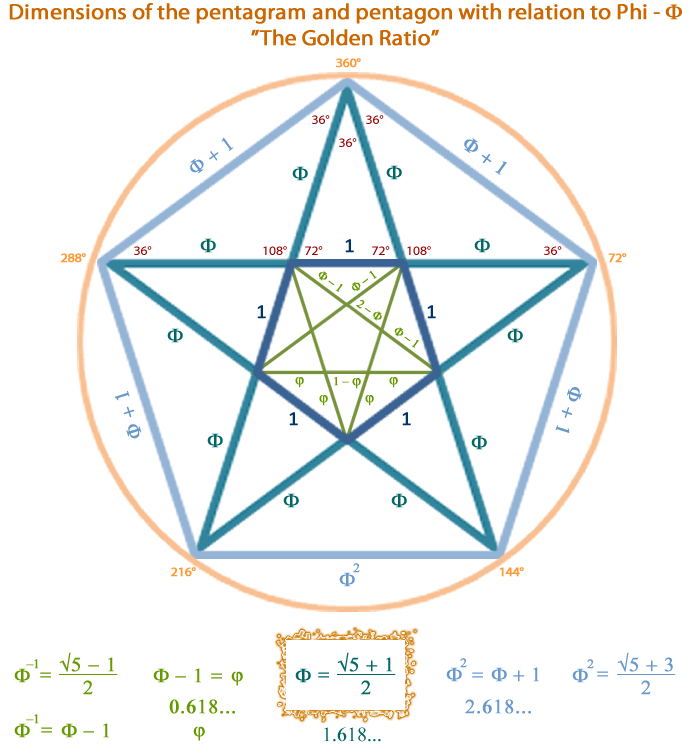
We use this thinking to move beyond the usual People, Process and Technology model. Instead, we focus on five dimensions that shape whether change succeeds or struggles: Strategy, Technology, Data, Delivery and People.
When these elements are treated separately, friction builds. When they are designed to work together, progress feels natural. Resistance reduces. Momentum grows.

Therefore, 72 Degrees is both, with some poetic licence, a philosophy and a standard. It is the point at which change feels clear, collaborative, and achievable rather than exhausting or forced.
So, with the prosaic bit done, let us start by sharing how we think about transformation and change, and why these five elements matter so much.
Transformation rarely, truly, starts with a board paper. It starts with conversation…
… in rooms where people are honest about what is and is not working. In sessions where leaders listen as much as they speak. In moments where a shared direction is shaped through discussion rather than instruction.
That human thread (conversation) runs through everything and sits at the heart of a human centric approach. It also underpins a change approach which commits us to empathy, openness, shared ownership and resilience.
Change works when people feel involved in shaping it, not when it happens to them.
Across the organisations we have worked with, whether stabilising struggling programmes, reshaping operating models, introducing new technology or supporting teams through new ways of working, the same five elements always determine the outcome
Handled in isolation, they create tension.
Handled together, they create momentum.
Strategy: Clear Direction That People Can Act On
Too many transformation initiatives run on habit rather than purpose. A good strategy is not a slide in a board pack. It is a story people understand and can use to make everyday decisions.
That starts with honesty. Leaders who welcome challenge, acknowledge risk and involve others in shaping the way forward create strategies that people trust.
When strategy is built with the people who will deliver it, not simply passed down, it becomes a guide through uncertainty rather than a slogan on a wall.
If the strategy does not resonate, nothing else will.
Technology: An Enabler, Not the Main Event
Technology only delivers value when it supports a clear, understood and shared outcome. Many organisations buy tools but never build real capability.
A human approach to technology change helps leaders move from intent to adoption. From design and selection through to day to day use. Technology should support better ways of working, not mask existing problems.
Technology is a tool. People still do the work.
Data: Insight That Improves Decisions
Data matters when it helps people have better conversations and make better choices.
Strong foundations matter here. Clear definitions, sensible governance, careful handling of sensitive information and analytics that people trust. Poor data creates noise and doubt. Good data builds confidence and focus.
A key point to note today, is Digital and AI fail without acurate, available and robust data!
The strongest leaders use data as guidance, not judgement.
Delivery: Turning Ambition Into Real Progress
Without strong, outcomes focused delivery, even the best ideas stall.
Many organisations seek help when plans have drifted, deadlines are slipping, and confidence is fading. The way forward is rarely complex. It is about clear outcomes based priorities, ownership, transparency and learning as you go.
Delivery is where trust is earned or lost. Leaders need to stay close, not to control, but to remove obstacles, support teams and stay connected to reality.
People: The Element That Brings Everything to Life
Change is delivered by people who feel heard, trusted and valued. No framework or tool can compensate for disengagement.
We need to place empathy, curiosity and resilience at the centre of leadership. We must design change with teams, not for them, and balance pace with space to think and reflect. Listen to the voices closest to the work because they often see the truth first.
Culture shows itself most clearly during change. Organisations that succeed put people first when it matters most.
Bringing It All Together
When Strategy, Technology, Data, Delivery and People move together, organisations gain clarity and confidence.
When ambition meets humanity, people commit with purpose.
When leaders value openness and empathy as much as milestones and measures, change lasts.
There is no template for this. But there is a mindset that helps every time: listen, work together, learn quickly, adapt often and keep people at the centre of the conversation.
That is how meaningful change happens.
That is how you write the next chapter with your organisation, not for it.
PS: Each of these dimensions requires far deeper discussion; we will be creating a series of articles that touch on each, and further. We believe in experimentation; our articles may not be perfect but aim to provoke debate, discussion, and thought. We thrive on engagement and feedback. Let's talk and please subscribe to follow our journey.

No comments yet